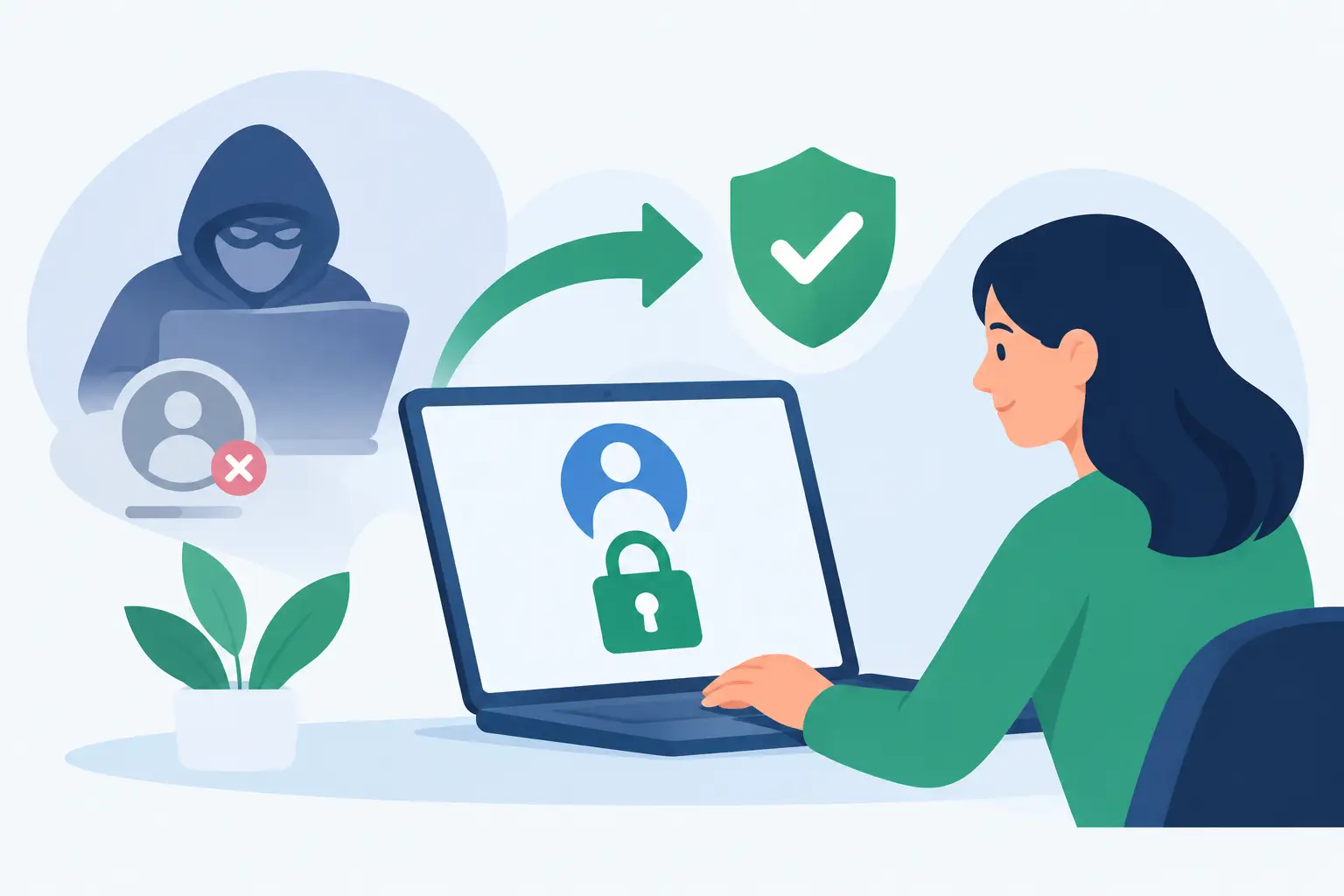
A compromised executive mailbox is not an email problem. A hijacked administrator account is not an identity problem. Both can become an enterprise-wide operating event in minutes. Effective account takeover recovery is the disciplined work of ejecting an attacker, proving they are gone, restoring access safely, and preserving the evidence needed to keep the mission moving.
The stakes rise quickly because attackers do not take over accounts simply to read messages. They use trusted identity to reset passwords, enroll their own multifactor devices, authorize fraudulent payments, move into cloud consoles, access production systems, and impersonate leadership. If recovery begins and ends with a password reset, the organization may return the account to the same attacker through an overlooked session, delegated permission, OAuth token, mailbox rule, or privileged role.
For organizations responsible for regulated data, operational technology, financial systems, or defense-adjacent workloads, recovery must be treated as an incident command function. Speed matters. Evidence matters. Continuity matters.
What account takeover recovery must accomplish
Recovery has four objectives that must happen in the right order: contain the active threat, establish what the attacker changed or accessed, restore only verified access, and harden the identity path against repeat compromise. These objectives overlap, but they should not be confused.
Containment stops further damage. Investigation prevents a false declaration of safety. Restoration returns the business to operation. Hardening reduces the odds that the same technique works again.
This is why a rushed restoration can create a second incident. An employee may need access immediately, especially if the compromised account supports manufacturing, customer service, emergency operations, or executive decisions. Yet restoring access before revoking active sessions, removing rogue authentication methods, and reviewing privilege changes can hand the attacker a renewed foothold.
The right balance depends on the account and its reach. A low-privilege employee account may be restored through a controlled reset and monitored re-enrollment. A domain administrator, cloud tenant administrator, finance approver, or OT support account demands a broader containment boundary and executive-level coordination.
The first minutes: contain identity before it spreads
The first question is not, "Who knows the password?" It is, "What authority does this identity hold right now?" Response teams should immediately determine whether the account has active sessions, federated access, privileged roles, API keys, application consents, recovery methods, delegated access, or connected devices.
Containment generally means disabling or restricting the account, revoking sessions and tokens, blocking suspicious source infrastructure, and pausing privileged elevation associated with the identity. If the attacker is active in an email platform, responders should also look for forwarding rules, hidden inbox rules, suspicious delegates, transport rules, and altered recovery settings. In cloud environments, they must examine newly created service principals, consent grants, access keys, and conditional-access exceptions.
A blanket shutdown is not always the right call. Disabling a critical operations account without a continuity plan can interrupt production or safety processes. In those cases, the response team may need to isolate the account from external access, move essential functions to a clean break-glass identity, and maintain a tightly controlled operational bridge while investigation continues.
Automation earns its value here. A SOAR-driven containment playbook can revoke sessions, suspend risky access, block hostile IPs, and generate signed records of each action before manual coordination catches up. The goal is not automation for its own sake. The goal is to cut attacker dwell time without creating disorder inside the business.
Do not trust the original alert scope
An account takeover alert often identifies only the first visible signal: an impossible-travel login, a new device, a suspicious inbox rule, or a failed multifactor challenge. That signal is a starting point, not a boundary.
Attackers commonly pivot from a single user identity to shared mailboxes, VPN access, SaaS platforms, file repositories, help desk workflows, and privileged administration. They may also use the compromised account to send credible phishing messages internally, turning one takeover into several.
Investigators should expand outward through identity, endpoint, network, and data telemetry. Look for unusual sign-in patterns, device registrations, privilege assignments, token use, data downloads, lateral authentication, and changes made shortly before or after the first suspicious activity. User and entity behavior analytics can help distinguish a rushed attacker from a legitimate user working outside normal patterns, but context remains essential. A traveling executive and a compromised executive can produce similar login anomalies.
Recover the identity, not just the password
A trusted recovery process rebuilds confidence in the account from the ground up. The user needs a clean device or a verified endpoint. The organization needs to validate recovery channels, remove unauthorized factors, rotate credentials and secrets, review delegated permissions, and re-establish least-privilege access.
For privileged identities, that process should include rotation of any credentials the account could access. A compromised administrator may have seen service-account secrets, vault entries, network-device credentials, API tokens, or emergency access procedures. Recovery that ignores those downstream exposures leaves the attacker with options even after the original account is remediated.
Authentication strength also matters. Password-only restoration is a weak finish to a serious incident. Hardware-backed WebAuthn or FIDO2 authentication provides stronger resistance to phishing and credential replay than passwords and SMS alone. Time-based one-time passwords can support layered access, while SMS should be treated cautiously because mobile-number takeover remains a real risk. For high-value environments, Post-Quantum Cryptography-hardened identity controls and Argon2id password protection strengthen the recovery baseline against both current and emerging threats.
Just-in-time privilege elevation is equally valuable after restoration. Rather than returning permanent administrative access because it is convenient, grant narrowly scoped elevation for a defined task and time window. That decision reduces blast radius if a device, session, or identity remains at risk.
Preserve evidence while restoring operations
Recovery without evidence may satisfy the immediate user, but it fails the organization when legal counsel, cyber insurers, auditors, regulators, customers, or law enforcement ask what happened. The response team needs a defensible account of the incident: how access was obtained, what systems were reached, what data may have been exposed, which actions were taken, and when the attacker was fully contained.
Preserve identity-provider logs, authentication records, endpoint telemetry, email traces, cloud audit events, firewall and DNS data, and relevant application logs. Record the exact time of each containment and recovery action. Maintain custody of artifacts and avoid overwriting valuable evidence through careless cleanup.
This requirement is especially urgent in regulated environments. A team may need to map the incident to controls under NIST, FedRAMP, CMMC, IEC 62443, or other contractual obligations. Continuous control monitoring and signed, timestamped response evidence turn a frantic recovery effort into a record that can withstand scrutiny.
Evidence also informs notification decisions. Not every account takeover creates a reportable breach, but no organization can make that judgment responsibly without understanding what the account accessed and whether data was viewed, altered, exported, or routed elsewhere.
Confirm the attacker is out
Containment is not complete when the original account can log in again. It is complete when the organization can reasonably demonstrate that the adversary has lost access across every path the compromised identity opened.
That verification requires sustained monitoring. Watch for renewed login attempts, token replay, suspicious enrollment activity, unusual application behavior, command execution from related devices, and contact with known malicious infrastructure. Hunt for the technique, not only the account. If phishing captured one user, search for the same campaign. If an OAuth consent grant was abused, inspect the tenant for similar grants. If a help desk process was manipulated, review adjacent identity-recovery requests.
This is where Zero Trust becomes operational rather than aspirational. Every session, request, device, and packet should be evaluated continuously against identity, context, and intent. Default deny, role-based and attribute-based controls, device posture, segmentation, and behavioral detection make it harder for a recovered identity to become an attacker’s return route.
Build recovery into the security architecture
The strongest account takeover recovery is the one that has been rehearsed before the incident. Leadership should know who can authorize account suspension, who owns communications, how break-glass access works, which systems are business critical, and where forensic evidence is retained. Recovery time objectives for identity services should be defined alongside recovery objectives for applications and infrastructure.
Vulcan Rampart approaches this as a mission-continuity problem: detect in seconds, contain in minutes, resolve with evidence intact. That posture joins identity controls, SIEM analytics, threat hunting, endpoint and network visibility, and automated containment into a single defensive line.
When an account is compromised, the business does not need vague assurances or a reset link. It needs disciplined command, verified restoration, and a security architecture that ensures the attacker has nowhere left to stand.