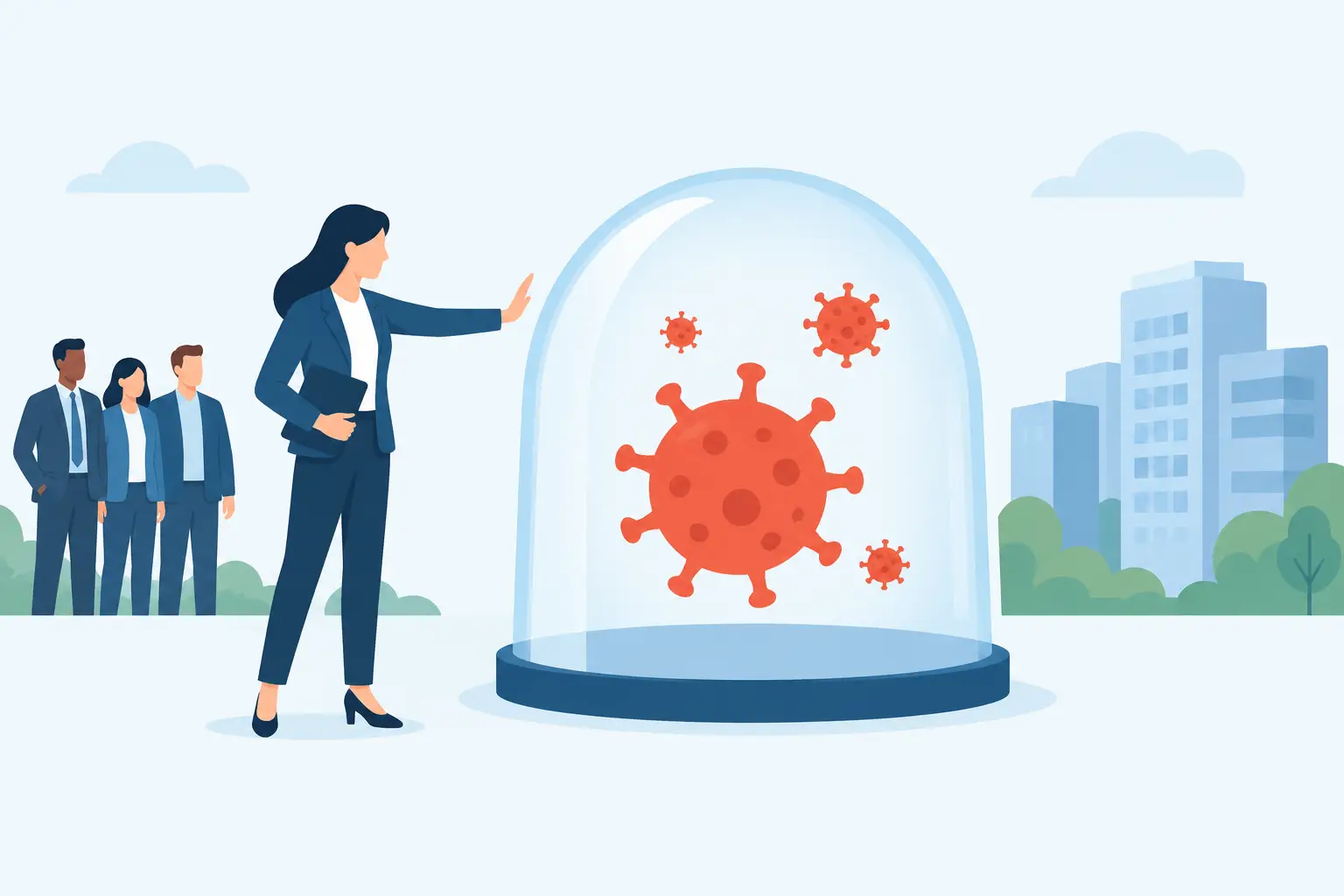
A compromised administrator session can move from one cloud console to every critical system before a team finishes its first conference call. That is the operational question behind when should companies invoke containment: not whether an alert is confirmed beyond doubt, but whether the evidence shows an attacker may be expanding access faster than the organization can safely investigate.
Containment is the decision to restrict or remove access, isolate affected assets, block communications, and limit an incident’s blast radius. It is not a declaration of defeat. Done well, it protects the mission while preserving the evidence needed to understand what happened and recover with confidence.
When Should Companies Invoke Containment During an Incident?
Companies should invoke containment when credible indicators show an active or likely active threat to identities, systems, data, or operational technology, and delay could materially increase harm. The threshold is not a single alert. It is a pattern of evidence tied to risk: unusual privilege use, lateral movement, suspected data exfiltration, ransomware behavior, repeated authentication anomalies, or a control-plane change that cannot be explained.
The wrong instinct is to wait for perfect attribution. Security leaders rarely get it during an active intrusion. An adversary does not need to prove they are hostile before encrypting file shares, creating persistent cloud access, or using a trusted vendor connection to reach production systems. A containment decision should be based on what the activity can do next, not merely on what investigators have already proven.
At the same time, containment should be proportionate. Taking an entire business unit offline over a low-confidence endpoint alert may cause more immediate operational damage than the alert itself. The objective is to deny the attacker room to maneuver while keeping essential services moving.
Invoke containment immediately for high-consequence signals
Some signals warrant action without waiting for a lengthy validation cycle. These include confirmed ransomware execution; an attacker using privileged credentials; unusual account changes involving global administrators, domain administrators, or cloud tenants; confirmed malware command-and-control traffic; active data staging or exfiltration; and unauthorized changes to identity, endpoint, network, or backup controls.
The same standard applies when a threat reaches systems where failure carries physical, regulatory, or mission consequences. For industrial control environments, health systems, defense operations, and regulated workloads, a potentially malicious remote session may justify immediate segmentation or access revocation even before the full scope is known. Safety and continuity requirements shape the response, but they do not remove the need to act.
A credible insider threat also deserves rapid containment. A departing employee downloading unusual volumes of sensitive data, an administrator disabling logs, or a user accessing systems outside their role can be as destructive as an external compromise. Insider events demand discretion, legal coordination, and careful evidence handling, but they should not be allowed to continue simply because the actor has legitimate credentials.
Escalate quickly when identity is in doubt
Identity compromise is often the decisive moment. If an attacker holds a valid session, token, API key, service account, or privileged credential, traditional perimeter controls may see authorized traffic. That is why organizations should contain when identity context breaks down: impossible travel combined with sensitive access, a device posture change during an active session, anomalous privilege elevation, or authentication from infrastructure associated with prior attacks.
Immediate actions may include revoking active sessions, disabling or restricting the account, rotating exposed secrets, requiring phishing-resistant reauthentication, and narrowing access through role-based and attribute-based policy. These measures can interrupt an attacker without necessarily shutting down the services that account supports.
The trade-off is real. Disabling a service account can interrupt production integrations. Revoking every user session can burden a workforce in the middle of a critical operation. But allowing a compromised identity to retain broad access because a reset is inconvenient invites a far more expensive outage. The containment plan must identify safe alternatives, owners, and recovery steps before an incident forces the choice.
Containment Is a Business Decision With Technical Evidence
The incident commander should not be asked to choose between security and operations with incomplete information. The right question is: what is the smallest action that meaningfully limits attacker capability, and what business process will it affect?
For a single suspicious workstation, network isolation may be enough. For a cloud identity incident, session revocation and conditional access restrictions may be the right first move. For lateral movement across a server segment, segmentation, credential resets, and selective service shutdowns may be necessary. For ransomware affecting shared infrastructure, isolating systems, protecting backups, and blocking known malicious traffic may need to happen in parallel.
This is why predefined containment tiers matter. Teams should agree in advance on who can authorize actions, which systems are mission-critical, what dependencies must remain available, and which indicators trigger automatic controls. A response plan that requires executive approval for every account suspension will lose the race against an attacker operating at machine speed.
Automation helps when it is governed. A security orchestration platform can block hostile IPs, quarantine endpoints, revoke tokens, and open an incident bridge within seconds. Yet automatic actions should be tied to confidence levels and asset criticality. Auto-isolating a finance laptop that is executing known ransomware behavior is sensible. Automatically shutting down a production controller based on an ambiguous anomaly may not be.
Preserve Evidence While You Contain the Threat
Containment does not mean destroying the investigative trail. In fact, an uncontrolled response can make recovery harder by erasing volatile evidence, overwriting logs, or alerting an adversary before responders understand the scope.
Before rebuilding or wiping an affected endpoint, capture the details that matter: active processes, network connections, memory where feasible, authentication events, endpoint telemetry, cloud audit logs, and relevant configuration changes. Preserve timestamps and chain of custody. For regulated organizations, signed, auditable evidence is not paperwork after the fact. It supports legal review, reporting obligations, cyber insurance claims, and decisions about whether systems can be trusted again.
There is a balance to strike. If malware is spreading, evidence collection cannot become a reason to delay isolation. Capture what can be collected safely and quickly, then deny the adversary access. A contained system can be examined. A compromised enterprise that remains open to attack may not have a stable environment left to examine.
Do Not Confuse Containment With Recovery
An isolated endpoint is not a recovered endpoint. A disabled account is not proof that persistence has been removed. A blocked IP address does not prove the attacker lacks another route.
After containment, responders must determine initial access, affected identities, persistence mechanisms, lateral movement, data exposure, and the integrity of backups and administrative tools. They must then eradicate malicious artifacts, rebuild trust in critical systems, rotate credentials and secrets, restore operations in controlled stages, and monitor for re-entry.
This is where Zero Trust changes the economics of an incident. Continuous verification, least-privilege access, just-in-time elevation, segmentation, and policy enforcement reduce the number of places an attacker can go after initial access. The goal is not to assume compromise will never occur. It is to make compromise containable.
Vulcan Rampart applies this posture across identity, endpoint, network, and data layers, pairing rapid response actions with audit-grade evidence. The result is a more disciplined response: detect in seconds, contain in minutes, and restore control without surrendering the mission.
Build the Decision Before the Alarm Sounds
The strongest containment decisions are prepared before the first alert. Executive, security, IT, legal, communications, and operations leaders should know their roles. They should rehearse scenarios involving compromised executives, ransomware in shared services, cloud tenant takeover, third-party access abuse, and insider data theft.
Those exercises expose the questions that technology alone cannot answer. Can operations tolerate isolation of this system for an hour? Who can approve emergency access? Which data sets trigger notification requirements? Are backup credentials truly separate from production identity? What happens if a vendor connection becomes the attack path?
Containment is invoked at the point where credible risk becomes more dangerous than controlled disruption. Organizations that define that point in advance act with discipline under pressure. When the perimeter falls, the mission depends on how fast the defenders hold the line.