A compromised privileged account can move from a single login anomaly to a business-stopping event before the next executive status call. That is the operating reality incident response platforms must address. The measure is not how many alerts a security team collects. It is whether the organization can detect in seconds, contain in minutes, preserve evidence, and keep mission-critical systems operating.
For executives and security leaders, an incident response platform is not another console to purchase. It is the command structure for a moment when time, certainty, and operational continuity are under pressure. The platform must bring together the signals, decisions, and enforcement actions required to stop an attacker before a contained compromise becomes a material event.
Incident Response Platforms Are Built for Action
Security tools often generate valuable telemetry without producing a defensible response. An endpoint alert may identify suspicious execution. Identity monitoring may flag impossible travel or unusual privilege use. Network inspection may reveal command-and-control traffic. Each signal matters, but none is enough on its own when attackers cross domains quickly.
An effective platform connects those signals into an operational picture. It establishes what asset is affected, which identity is involved, what access the identity holds, what data or systems are at risk, and which containment action can be taken without creating unnecessary business disruption.
That distinction matters because a false positive can interrupt production, while a delayed response can allow ransomware to spread, sensitive data to leave the environment, or an insider to erase evidence. The right response is rarely just to isolate everything. It is to contain with precision, based on verified identity, asset criticality, business context, and the attacker’s observed path.
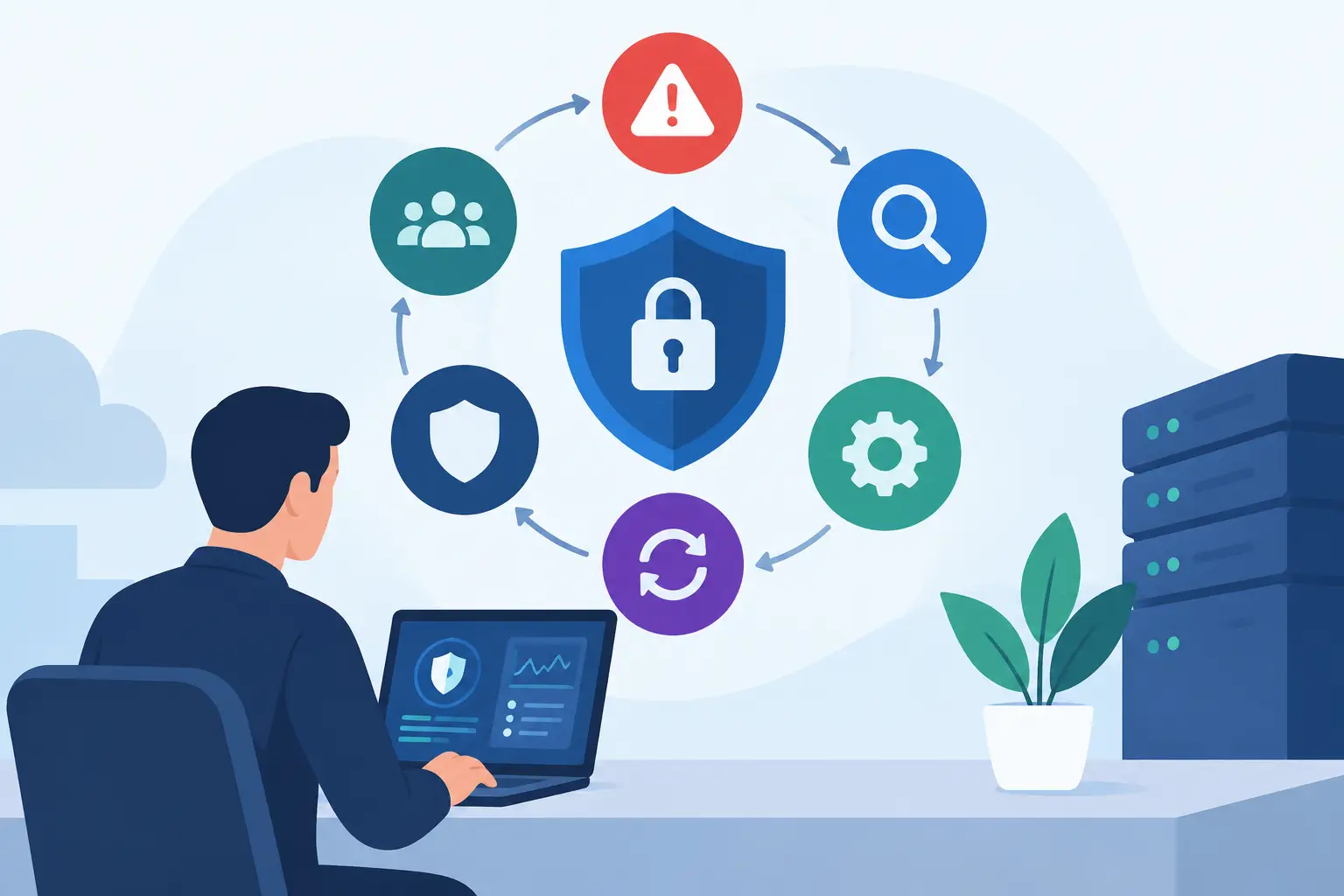
A platform should support the full incident lifecycle: detection, triage, containment, investigation, eradication, recovery, and evidence preservation. If these stages require responders to manually pivot through disconnected tools, response speed depends too heavily on individual heroics. That is not a sustainable security model for an enterprise that must remain operational.
The Core Capabilities That Separate Defense From Alert Noise
The value of incident response platforms is determined by what they can enforce during an active incident, not by the number of integrations displayed in a product presentation. Four capabilities are foundational.
- Cross-layer visibility: The platform should correlate endpoint, network, identity, cloud, mobile, and data signals. A suspicious endpoint event means more when it is connected to an abnormal authentication pattern, lateral network movement, or access to sensitive records.
- Automated containment: Responders need the ability to revoke sessions, disable or step down compromised accounts, isolate devices, block hostile infrastructure, and restrict access paths through governed playbooks. Automation should reduce response time without removing human authority for high-impact decisions.
- Investigation and evidence: Every action must be traceable. A defensible incident record includes the alert source, analyst findings, containment decisions, timestamps, approvals, and recovery actions. This record supports legal review, insurance requirements, customer obligations, and regulatory examination.
- Recovery orchestration: Containment is only the first battle. The platform must help teams restore trusted access, validate systems before returning them to service, rotate credentials, remove persistence, and confirm that the adversary no longer has a path back in.
These capabilities are strongest when they are connected by a policy engine rather than a collection of scripts. A playbook that automatically blocks an IP address is useful. A policy-driven action that also evaluates the affected user, device health, network location, privilege level, and data sensitivity is far more effective.
Zero Trust Changes the Response Equation
Traditional incident response often assumes that a trusted user or device can retain broad access until the investigation is complete. That assumption gives attackers time. A compromised session can become a launch point for privilege escalation, lateral movement, and data exfiltration.
Zero Trust changes the equation by continuously verifying identity, device posture, context, and intent. During an incident, this enables targeted restrictions instead of blunt-force shutdowns. A security team can revoke one session, limit access to a sensitive application, remove just-in-time elevation, or require stronger authentication before allowing a user back into an environment.
This is particularly important for operational technology, regulated workloads, and production systems where taking everything offline may create its own safety, revenue, or mission risks. The goal is not indiscriminate denial. It is controlled access that keeps legitimate operations moving while hostile activity is cut off.
Authentication also belongs inside the response strategy. If an attacker has captured a password, resetting that password alone may not resolve the incident. Response teams must understand active sessions, enrolled factors, API tokens, service accounts, delegated permissions, and recovery methods. Strong authentication controls, including hardware-backed factors and modern cryptographic protections, reduce the attacker’s ability to reestablish access after remediation begins.
Automation Must Be Governed, Not Blind
Automation is essential when an attack is moving at machine speed. It can block known malicious infrastructure, isolate a confirmed compromised endpoint, revoke a stolen token, open an incident bridge, and collect forensic artifacts while human responders assess impact.
But automation without governance can become another operational risk. A containment workflow that shuts down a critical production process based on weak confidence is not resilience. It is an outage delivered by the security stack.
The answer is tiered response. Low-risk, high-confidence actions can run automatically. Actions affecting critical systems, privileged administrators, production networks, or high-value data should require escalation paths, preapproved decision criteria, and clear ownership. Incident response platforms should make those decisions fast, visible, and auditable rather than forcing teams to improvise permissions during a crisis.
This is also where signed, timestamped audit evidence becomes more than a compliance feature. It proves what the organization knew, what it did, and when it acted. In a post-incident review, that evidence helps leaders distinguish a controlled response from a chaotic one.
Selecting a Platform Around Your Actual Blast Radius
The best platform depends on the organization’s operating environment. A distributed enterprise managing cloud applications, remote endpoints, and privileged SaaS access faces a different response challenge than a manufacturer protecting industrial control systems. A defense contractor must weigh CMMC obligations and supplier exposure. A federal environment may prioritize FedRAMP alignment and formal authorization requirements.
Start with the assets that cannot fail: production systems, identity infrastructure, privileged accounts, sensitive data stores, operational technology, and business-critical applications. Then examine the attack paths that could reach them. The platform should give responders visibility into those paths and the authority to interrupt them quickly.
Security leaders should also test integration claims with real scenarios. Can the platform ingest and correlate telemetry from existing EDR, SIEM, MDM, identity, cloud, and network tools? Can it execute containment actions across those systems? Can it preserve a usable chain of evidence? Can an experienced responder understand the incident state in minutes rather than spending hours assembling context?
Vulcan Rampart approaches this requirement as a mission-continuity problem: native analytics, automated threat hunting mapped to MITRE ATT&CK, Zero Trust policy enforcement, and SOAR-led containment must operate as one defensive line. The objective is not merely to identify malicious behavior. It is to prevent a confirmed threat from reaching the assets that keep the organization running.
Recovery Is the Test That Matters Most
Many incident programs are designed around detection metrics. Mean time to detect is useful, but it does not tell a board, regulator, or customer whether the organization can recover safely. Recovery requires proving that systems are clean, identities are trusted, access is correctly restored, and the attacker’s persistence mechanisms have been removed.
That work often exposes weaknesses that detection alone cannot reveal. Backups may exist but be inaccessible. Documentation may be outdated. Service-account ownership may be unclear. Recovery credentials may be stored in the same environment that was compromised. An incident response platform should help expose these dependencies before an active incident turns them into failure points.
The right question for leadership is simple: when a privileged account is compromised or a ransomware operator reaches a critical system, can the organization make informed containment decisions immediately and restore trusted operations with evidence to prove it? The answer defines whether the security program is a collection of tools or a rampart built to hold when the perimeter falls.